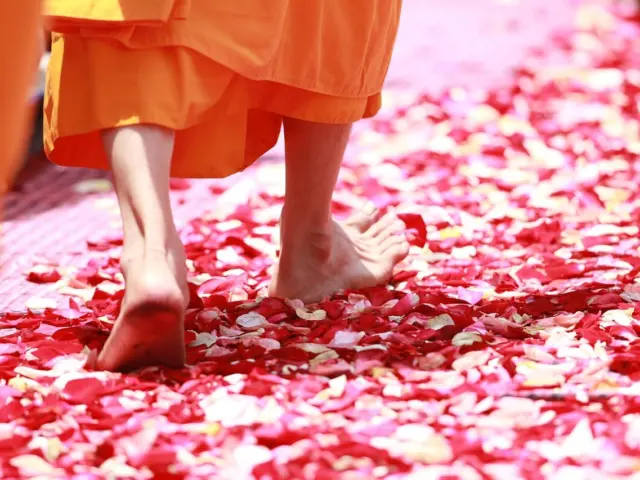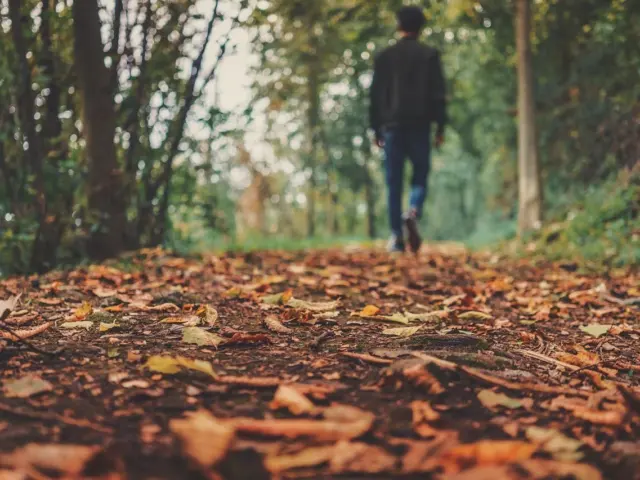
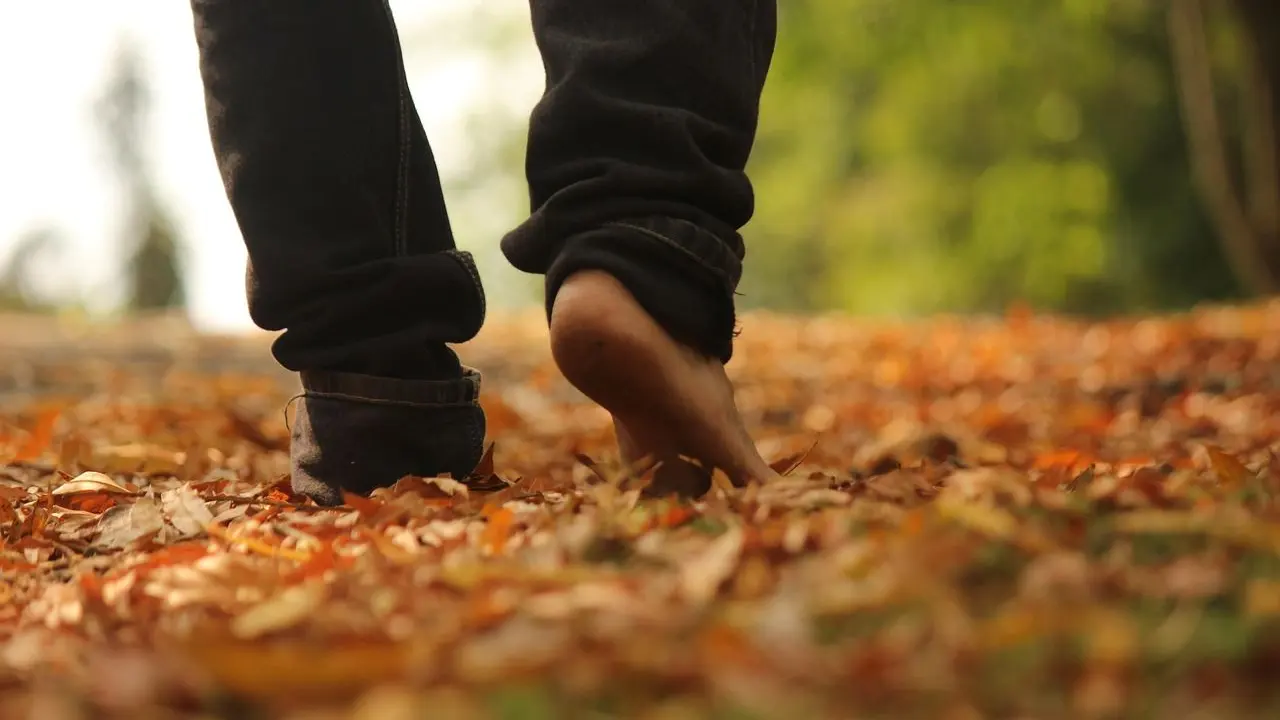
If your head is too busy to sit still, mindful walking in nature may suit you better. Walk slowly outdoors, let your senses lead, and gently bring your attention back whenever it drifts.
It is a practical form of mindful walking that needs no gear, no class and no special trail.
| Item | Value |
|---|---|
| Participants in the Stanford-area nature-walk experiment | 38 young adults |
| Length of the walks in that experiment | 90 minutes |
| Result for the urban-walk group | No decrease in rumination or sgPFC activity |
| Light walking time linked to help with mild depression, anxiety and attention | 20 minutes |
| Senses to tune into on a sensory walk | Five |
The figures come from the eePRO summary of the study and Mindful.org. They can change, so check the sources before you rely on them.
What mindful walking in nature actually is
Mindful walking means paying deliberate attention to the act of walking and to what is around you. You are not trying to get anywhere or burn calories. You are practising noticing.
Doing it outdoors adds a lot to notice: changing light, birdsong, wind on your skin, the give of soil or gravel under your shoes. Nature also tends to hold attention gently, so there is less need to force it.
Mindful.org describes how ordinary walking often runs on autopilot. To break out of it, you might ask yourself, “How do I know I am walking?” and then check in with your senses.
What the research suggests
The best-known study here is not about mindfulness as such, but about time in nature. In a Stanford-area experiment, thirty-eight young adults were randomly assigned to a 90-minute walk in either a natural or an urban environment.
Before and after, they answered a questionnaire on rumination, which is repetitive thought focused on negative aspects of oneself. They were also scanned for activity in a brain region called the subgenual prefrontal cortex (sgPFC).
- The nature-walk participants showed decreases in both self-reported rumination and sgPFC activity.
- The urban-walk participants showed no such effects.
Treat this with care. The group was small and young, and the study tested a nature walk, not a mindful one. It is a reason to be curious, not a promise of results.
Mindful.org adds a gentler benchmark: studies abound showing that light walking for 20 minutes can help mild depression, anxiety and attention. That is a useful target if you do not have a free afternoon.
How to take a mindful walk, step by step
You do not need a wilderness. A park, a river path, a garden or a quiet tree-lined street will do.
- Choose a safe route. Pick somewhere with little traffic and decent footing, so you can relax your attention.
- Start by arriving. Stand still for a few breaths and feel your feet on the ground.
- Slow down. Walk a little slower than usual, enough to notice how each step happens.
- Open your senses. Move attention between sight, sound, smell, touch and, if it fits, taste.
- Return, kindly. When your mind wanders, notice where it went and come back to your senses.
- Finish with a pause. Stop for a moment and notice how you feel before you check your phone.
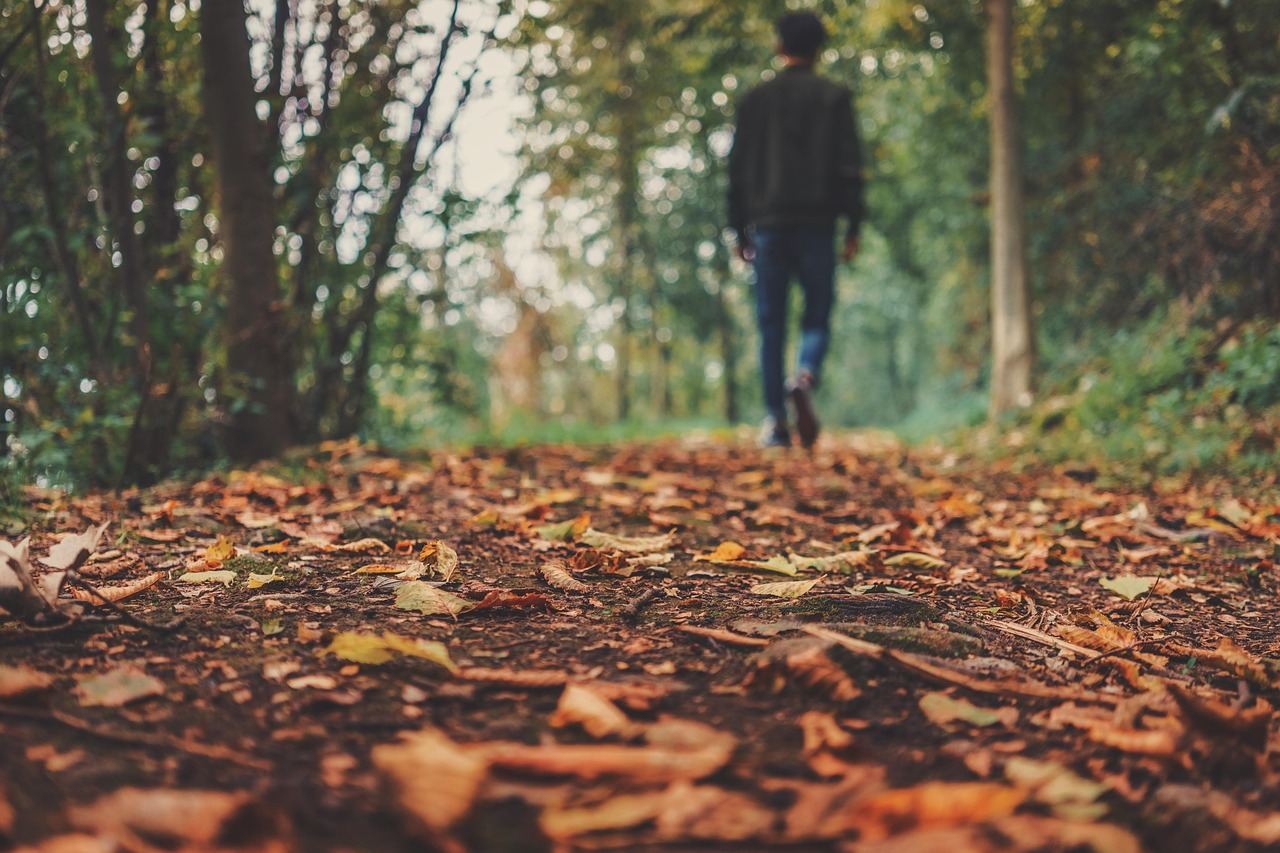
Mindful.org stresses doing this without judging yourself or your wandering mind. Drifting off is not a failure. Noticing that you drifted is the practice.
Why nature helps attention settle
Nobody fully knows why green spaces seem to help, and the research above does not settle it. A reasonable, modest idea is that natural scenes offer gentle, varied things to notice without demanding a response, unlike notifications or traffic.
That makes it easier to rest attention on a leaf, a sound or your own footsteps. Whatever the mechanism, the experience is simple to test for yourself: try a walk, notice how you feel before and after, and keep what works.
Try a sensory walk
One easy variation is the sensory walk. Mindful.org describes it as an adaptation of mindful walking meditation that simply involves tuning into our five senses as we move through space.
Give each sense a short turn rather than trying to do everything at once.
- Sight: look for colours, edges and the way light falls through leaves.
- Sound: pick out the farthest sound, then the nearest one.
- Smell: notice damp earth, cut grass, pine, or rain on warm pavement.
- Touch: feel air temperature, a breeze, the texture of bark if it is safe to touch.
Mindful.org notes that our senses keep us grounded in the moment while our thoughts drift to the past or future. That is why this version works well for beginners who find silent focus on the feet dull.
Common obstacles and how to handle them
Most people hit the same few snags in the early weeks. Knowing them in advance makes them easier to meet with patience.
- Restlessness. If slow walking feels awkward, walk at your normal pace and keep the focus on your senses instead.
- Planning and problem-solving. The mind loves to draft to-do lists outdoors. Label it quietly as “planning” and return to what you can hear or see.
- Self-criticism. Thinking “I’m bad at this” is just another thought to notice, not a verdict on your practice.
- Distractions. Dogs, cyclists and passing conversations are part of the walk. Let them be something to notice rather than something to shut out.
None of these means the walk has failed. Each one is a chance to practise the same small move: notice, then return.
Adapting the walk to the season and your body
Nature changes through the year, and so can your walk. In colder months you might attend to the sound of frozen ground or the feel of cold air at your nose. In warmer months, the smell of leaves and the hum of insects often take centre stage.
Your body counts too. If you use a cane, walker or wheelchair, or if you tire easily, the same approach applies: choose a route that suits you, move at your own pace, and let the senses lead. Sitting on a bench partway through and simply listening is still part of the practice.
Weather matters for comfort and safety. Wear shoes with decent grip, carry water if you need it, and tell someone where you are going if the route is remote.
Making it a habit
Try brief, regular walks to build a habit. A brief walk on the same path each week lets you notice small seasonal changes, which is its own quiet reward.
If you tend to feel on edge, you may like the more targeted ideas in mindful walking for anxiety. If you are wondering how this compares with sitting practice, see this look at walking meditation vs sitting meditation.
A few habits help it stick:
- Leave headphones at home, or at least pause the audio.
- Pick a regular day and place so the walk becomes automatic.
- Dress for the weather, because discomfort pulls attention away from the walk.
- Stay aware of traffic, uneven ground and other people, especially outdoors.
This is general educational information, not medical advice. If low mood or anxiety is affecting your daily life, speak with a qualified health professional.
Frequently asked questions
Do I need to walk slowly?
Show answer
Not necessarily. A slower pace makes it easier to notice sensations, but Mindful.org’s sensory walking only asks that you tune into your senses as you move. Choose a pace that feels comfortable and safe.
Is a city park good enough?
Show answer
Yes, for practising attention. The study above compared a natural setting with a busy urban one, so green space may matter for the effects it measured, but a park gives you plenty to notice.
How long should a mindful walk last?
Show answer
There is no required length. The experiment used 90 minutes, while Mindful.org points to light walking for 20 minutes. Start with whatever you can fit in and build from there.
What if my mind keeps wandering?
Show answer
That is normal. Notice where it went, then return to your senses without judging yourself. Each return counts as practice.