Your mind races even when your feet are moving, and you want a calmer way to walk. Mindful walking means walking while knowing you are walking: feel each step, follow your breath, and return gently when you drift.
| Item | Value |
|---|---|
| Core definition (Plum Village) | Walk in such a way that we know we are walking |
| Breath and steps (Plum Village) | Two or three steps on the in-breath, three or four on the out-breath |
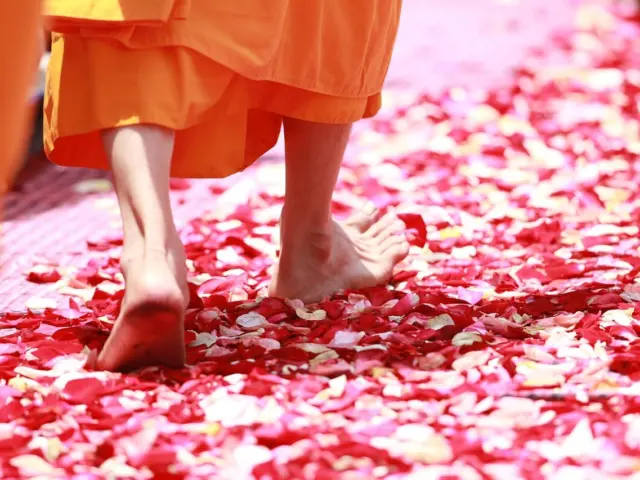
| Simplest version (Plum Village tradition) | One breath per step, focusing on your foot touching the Earth |
| Evidence status (2021 systematic review abstract) | Effects described as inconclusive, yet the practice is called promising |
These figures come from Plum Village’s walking meditation page and the 2021 review abstract. They can change, so check the sources before you rely on them.
What mindful walking actually is
Mindful walking is ordinary walking with a different kind of attention. You are not trying to get fit, reach a destination or empty your head. You are practising noticing what is already happening: the contact of your feet, the swing of your arms, the air on your face, the thoughts that come and go.
The idea is old and widely shared. In the Plum Village tradition, the teaching is stated plainly: “Walking in meditation means to walk in such a way that we know we are walking.” Nothing more mystical is required than that.
Many people use the terms mindful walking and walking meditation interchangeably. A rough distinction helps. Walking meditation is usually a formal, slow practice done for a set time, while mindful walking can be folded into any walk, even the one to the bus stop.
This guide is independent and educational. It is not connected to any teacher, centre or organisation named here, and it offers no services or consultations. It simply gathers what is known and turns it into steps you can try.
How to start: a simple first walk
You do not need special shoes, a special place or a free afternoon. A short, quiet stretch of path, a hallway or a garden is enough. Choose somewhere safe where you will not need to think about traffic.
- Stop and arrive. Stand still for a few breaths. Notice your weight through both feet and let your shoulders drop.
- Set an intention. Silently tell yourself that for this walk you are only walking. Worries, plans and lists can wait.
- Take the first step slowly. Feel the heel, the outer foot and the toes meet the ground. Let the other foot follow without hurry.
- Follow the rhythm. Keep a gentle pace that feels leisurely but not theatrical. If slow feels awkward, walk at a natural pace and refine later.
- Notice the wandering. Sooner or later you will find you have been planning dinner. Name it quietly (“thinking”) and return to your feet.
- Finish deliberately. Stop, breathe, and notice how your body feels before you move on with your day.
That sequence is the whole practice. Everything else in this guide is variation, support and troubleshooting. If you want ready-made drills to try, the mindful walking exercises guide builds on these basics.
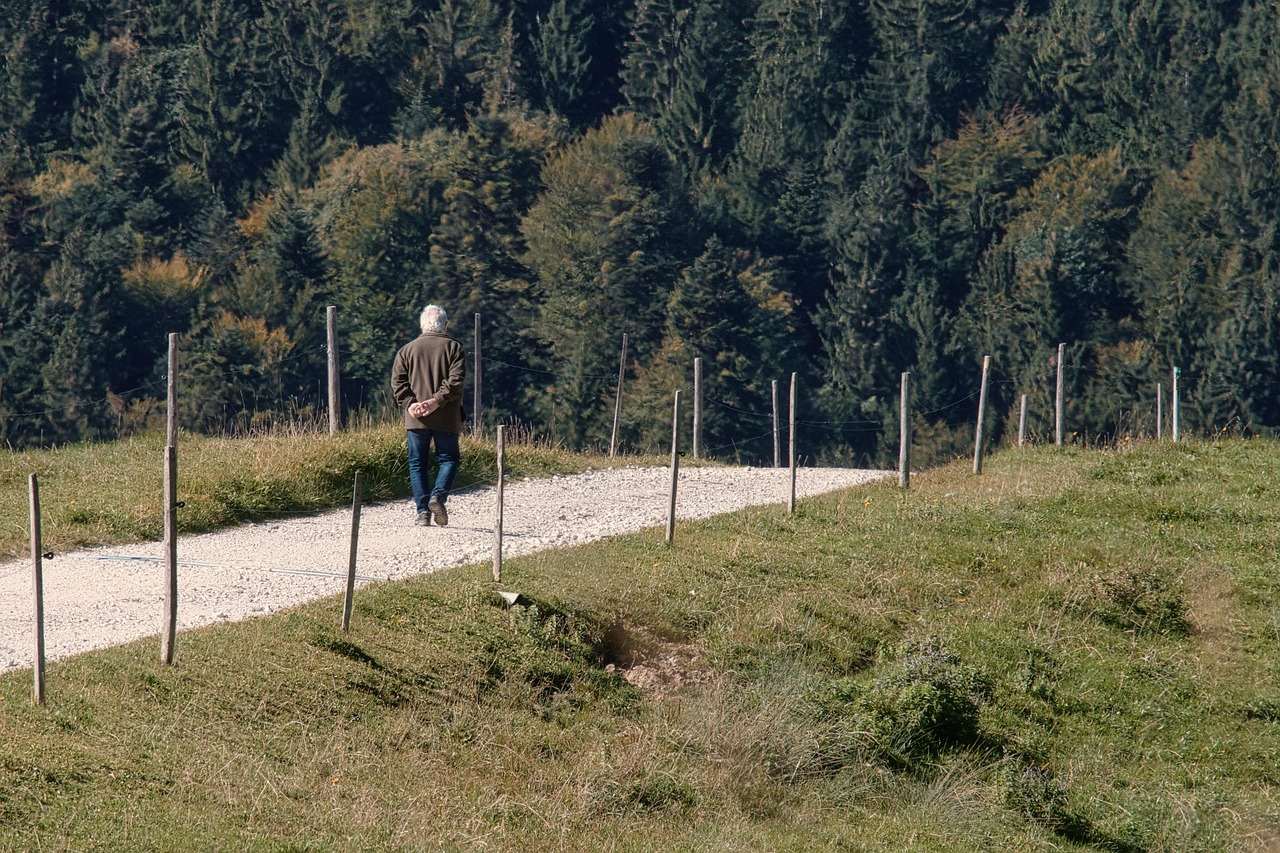
Anchors for your attention
An anchor is the one thing you return to when the mind wanders. Having a clear anchor is what separates mindful walking from a daydream with legs. You can pick one anchor per walk and change it next time.
- The soles of the feet. Feel pressure, temperature and texture under each step. This is the classic anchor and the easiest to find.
- The breath. Notice the in-breath and out-breath without controlling them, or link them to your steps.
- Sounds. Let sounds arrive and pass without labelling them good or bad. Birds, engines and voices are all equal.
- The whole body. Sense the body walking as one moving shape, from the head balanced over the hips to the swing of the arms.
- What you can see. Rest your gaze softly ahead and let colours and shapes come to you rather than hunting for them.
Plum Village describes a sequence that begins with the feet. In its words, “We become aware of the contact of our feet with the ground, and the flow of our breathing.” From there, as its page explains, awareness widens until “we become aware of our whole body walking.”
Linking breath and steps
The Plum Village page suggests: “We may take two or three steps as we breathe in, and then three or four steps as we breathe out.” It adds that the pattern depends on your lungs and the natural rhythm of your steps, so there is no correct number.
A simpler version appears in a summary of the tradition by The Conversation, which lists the instruction to “take one breath per step, focusing on your foot touching the Earth.” Try whichever feels less forced. If counting makes you tense, drop it and go back to the soles of your feet.
Choosing a pace
Slow is helpful because it makes sensations easier to notice, but slow is not a rule. A brisk walk can be mindful if your attention is on the walking. Match the pace to your purpose: slower for settling, steadier for a commute, and gentle if you are tired or stiff.
What does the research say?
Interest in mindful walking has grown, but the research is still young. A 2021 abstract from a systematic review of meditative and mindful walking, available through Digital Commons at Western Kentucky University, states that “The effects of two modalities, meditative and mindful walking, are inconclusive.” The same abstract says its review was “apparently the first synthesis of the meditative and mindful walking literature.”
Its conclusion is hopeful but measured: “Meditative and mindful walking are two promising, novel non-pharmacological modalities of improving mental and cardiovascular health.” Read that as encouragement to try the practice, not as proof of any particular result for you.
A fair reading of this evidence, as of that 2021 abstract, looks like this:
- The practice is low-risk for most people, costs nothing and is easy to try.
- Research quality and consistency were still being sorted out when the review was written.
- Walking in itself is already good for most bodies, so it is hard to know which benefits come from mindfulness alone.
Newer reviews may have appeared since, so treat any single summary as a snapshot. For a plain-language tour of reported effects, see the companion guide on mindful walking benefits. Nothing here is medical advice; if you live with a health condition or pain, talk to your own clinician about what movement suits you.
Where and when to practise
The best place is the one you will actually use. Many people start in a familiar spot because there is less to react to. Over time you can vary the setting and notice how it changes your attention.
Outdoors and in nature
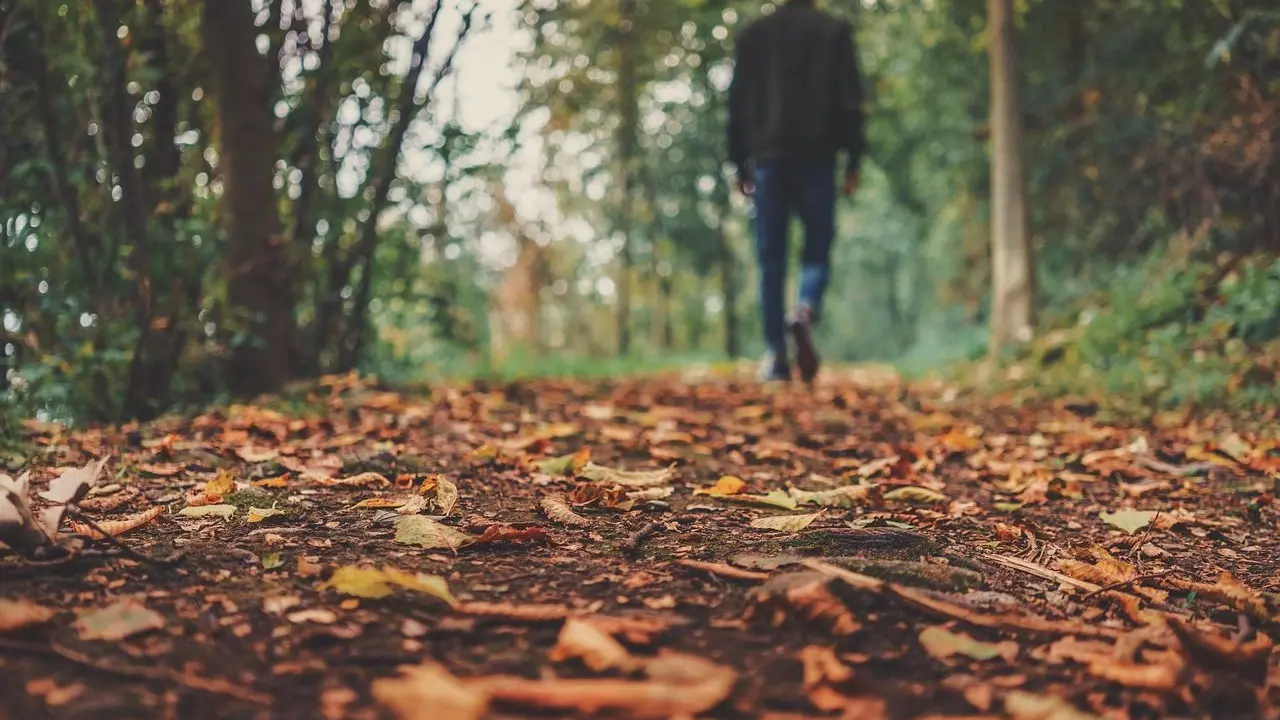
Green space gives your senses plenty to rest on: birdsong, moving leaves, uneven ground. If you like that texture, read more on mindful walking in nature. Keep your walk safe by choosing paths you know and dressing for the weather.
Around a labyrinth
A labyrinth is a single winding path with no dead ends, so you do not have to decide where to turn. That takes away one source of mental chatter and makes it a natural setting for slow walking. If you are curious about how these paths are laid out, the page on labyrinth design explains the common patterns.
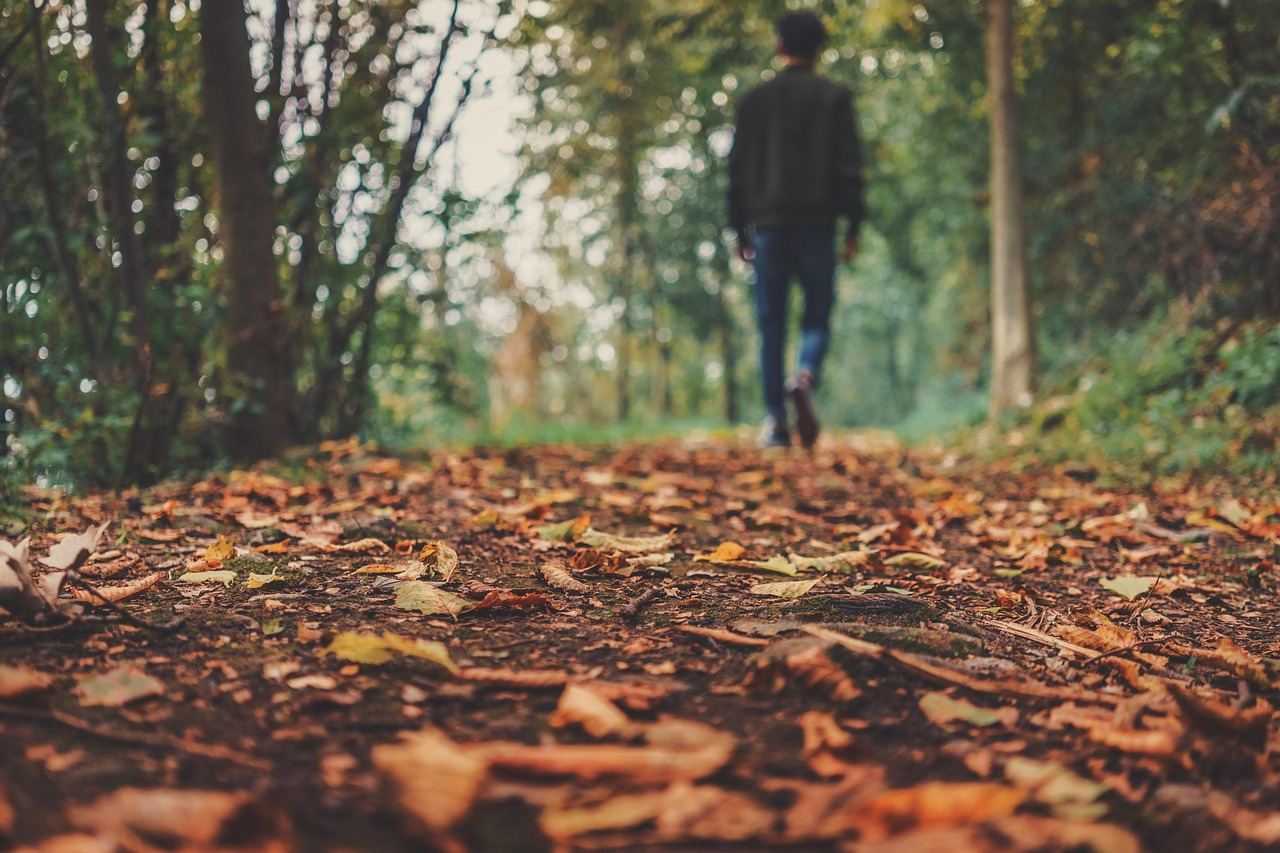
During a busy day
You can practise in short pieces. Walk mindfully from the car to the door, down a corridor or around the block at lunchtime. Ideas for fitting this around a job are collected in mindful walking at work.
Pairing the practice with a daily trip may help you remember to practise. Choose one regular journey, such as the walk to the shops, and let the first few steps be your reminder to arrive in your body.
When you feel anxious
Walking gives restless energy somewhere to go, and the steady rhythm gives your attention a handhold. Keep it gentle and do not force calm. The guide to mindful walking for anxiety goes deeper on this, and persistent anxiety deserves proper support from a qualified professional.
Working with common obstacles
Almost everyone meets the same few difficulties. They are not signs that you are doing it wrong; they are the practice itself.
- “My mind won’t stop.” That is normal. The skill is noticing you have drifted and coming back, not preventing the drift.
- “I feel silly walking slowly.” Walk at a regular pace in public and save slow walking for private spaces.
- “I get bored.” Switch anchors, from feet to sounds to the breath. Boredom is also something you can observe with curiosity.
- “I am worried about balance.” Go slowly near a wall or rail, keep your eyes open, and skip any step that feels unsafe.
- “I keep checking my phone.” Put it in a pocket on silent, or leave it behind for a short walk.
If sitting still has never worked for you, you are not alone, and movement can be an easier doorway. To weigh the two approaches, see walking meditation vs sitting meditation.
Using guidance or a script
Some walkers prefer to be talked through a session, especially at the start. A walking meditation script can provide the wording you would otherwise have to improvise. You can also record your own prompts in a calm voice, or simply repeat a short phrase silently with each step.
The Plum Village tradition, summarised by The Conversation, begins with a moment to breathe and centre the body before walking. The same article says walking meditation is a key part of every visit to the 11 Plum Village monasteries Thich Nhat Hanh founded, which shows how central it is to that tradition.
Adapting the practice to your body and mood
Mindful walking should fit you, not the other way round. Your energy, health and mood change from day to day, and the practice can change with them. Treat each walk as an experiment rather than a performance.
On low-energy days
When you are tired, do less. Walk the length of a room, or just the first few steps out of the door, and let that count. The point is to practise returning to the body, and a small return is still a return.
On restless days
If you feel wired, a very slow pace can make the restlessness louder. Start at a comfortable, natural pace, feel your feet touch the ground, and adjust your pace if that feels helpful. You are allowed to begin where you are.
With physical limits
Mindful walking does not depend on speed, distance or grace. If you use a cane, walker or other support, your attention can rest on the grip of your hands, the rhythm of the support and the contact of your feet. If walking is not possible, the same attention can be brought to wheeling, or to the sensation of movement in any part of the body you can feel.
With other people
Walking mindfully in a pair or a group is a different experience. Agree beforehand to stay quiet for a set stretch, then compare notes afterwards. Each person keeps attention on their own steps, yet the shared silence often feels supportive.
Simple ways to deepen it over time
- Walk the same short route several times and notice what changes each pass.
- Try one anchor for a week before switching, so you learn how it feels.
- Add a few quiet breaths at the start and end of every walk.
- Pay attention to how you feel when you stop, since that moment often teaches the most.
- Read or listen to a short teaching once in a while, then test it on your next walk.
None of this requires belief in any tradition. You can treat mindful walking as a plain attention exercise, borrow the parts that help, and leave the rest.
Building a steady habit
Small and regular beats long and rare. Try a few minutes regularly if that fits your routine. Link the practice to something you already do, so you do not rely on willpower.
Some practical habits help it last:
- Pick a consistent trigger, such as the first steps after leaving home.
- Keep an informal note of how you felt before and after. Patterns become visible over weeks.
- Treat missed days as ordinary, not as failure.
- Walk with a friend now and then. As Plum Village puts it, “Keep your attention on your own feet, but know that we are walking together.”
It helps to decide in advance what counts as success. A good walk is not one where the mind stayed quiet; it is one where you noticed, at least once, that you had wandered and came back. Each of those small returns is the repetition that builds the skill, much like a single lift in a gym.
Weather, season and daylight will shape your routine, so keep a wet-day option indoors. A hallway, a living room or even a few paces beside a desk can host the same attention. Having a backup plan removes one of the easiest excuses.
A short closing ritual can mark the end of a walk. Pause at the door, take one slow breath, and silently note one thing you noticed. Use this pause to notice how you feel before moving on.
Finally, be kind about the results. Some walks will feel spacious and others will feel like a tug of war with your to-do list. Both are useful, because both show you how your attention actually behaves.
Notice whether the practice feels helpful, and decide whether you want to continue.
Frequently asked questions
Is mindful walking the same as walking meditation?
Show answer
They overlap heavily. Walking meditation usually implies a formal, slow practice, while mindful walking can happen on any walk. Both rest on knowing that you are walking.
How slowly should I walk?
Show answer
Slow enough to feel your steps, and no slower. Plum Village describes walking leisurely and enjoying every step, so comfort matters more than a particular speed.
Do I need to count my breaths and steps?
Show answer
No. Counting is optional. Plum Village says the pattern depends on your lungs and the natural rhythm of your steps, and you can use the soles of your feet as your anchor instead.
Does research prove mindful walking works?
Show answer
Not yet conclusively. A 2021 systematic review abstract called the effects inconclusive while describing the practice as promising, so treat it as a low-risk practice to try rather than a proven treatment.
Can I do it if I have mobility limits?
Show answer
Often yes, in an adapted form, such as noticing the sensations of each step with a support nearby. Ask your own clinician about what is suitable for you.