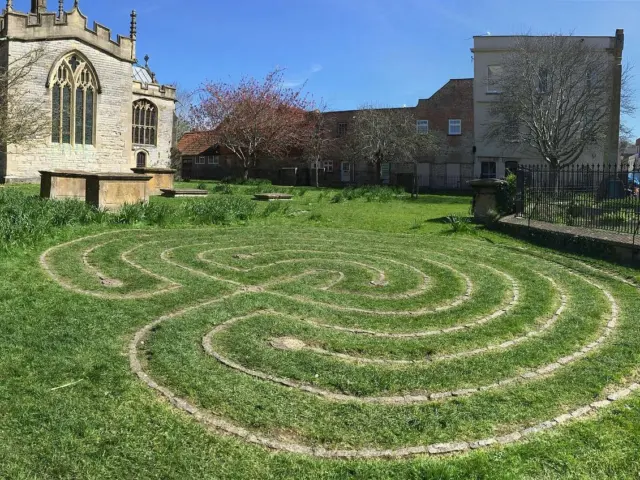
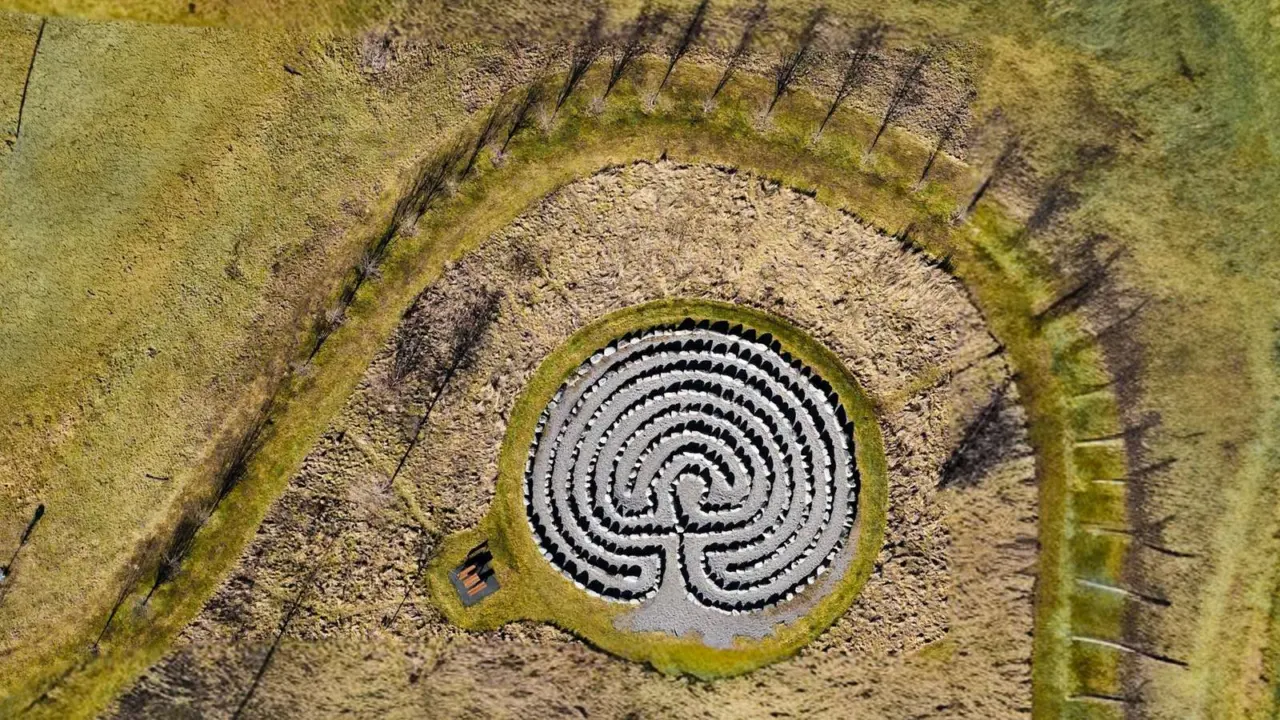
Standing at the entrance and unsure what to do? Here is how to walk a labyrinth: pause, set an intention, follow the single path at your own pace, rest at the centre, and walk back out.
This guide is part of our wider look at the labyrinth and what it is for.
| Item | Value |
|---|---|
| Stages of the walk | Three: releasing, receiving, returning |
| Way out | The same path you came in on |
| Time at the centre | As long as you like |
| Pace | Your natural pace |
| Right or wrong way | No right way or wrong way |
These points come from Veriditas and Central Connecticut State University’s meditative labyrinth page. Guidance can change, so check the sources before you rely on it.
What a labyrinth walk actually is
A labyrinth is a single winding path that leads to a centre and back out again. You do not have to solve anything, because there are no dead ends and no choices about which way to turn. That is the big difference from a puzzle, and our piece on labyrinth vs maze explains it in more detail.
Because the route looks after itself, your attention is free for something else.
Walking labyrinths has a long history. Boston College describes its memorial labyrinth as a copy of the 13th-century labyrinth laid in stone on the floor of the nave of Chartres Cathedral, and notes that walking them was part of popular and religious culture in medieval Europe, according to its About page.
Before you step in
A little preparation makes the walk easier. None of it is required, but each item removes a small distraction.
- Wear comfortable shoes or go barefoot if the surface and weather allow it.
- Silence your phone, or leave it in a bag.
- Take a few slow breaths while you stand outside the entrance.
- Decide whether you want a question or intention, or simply want to walk with no agenda.
The university guide suggests setting an intention, with examples such as “I’m walking today just to relax”. An intention can be as light as that. It is a gentle direction, not a task to complete.
Step by step: how to walk a labyrinth
Veriditas says that generally there are three stages to the walk: releasing on the way in, receiving in the centre and returning on the path back out. The steps below follow that shape.
- Pause at the entrance. Stand still, breathe and settle. A short bow or a moment of quiet is a common way to mark the start, though it is entirely optional.
- Walk in and release. Move at the speed that feels natural. Let thoughts, worries and the day’s noise ease off as the path turns.
- Reach the centre and receive. Stop, then stand, sit or simply look around. Stay as long as you like, listening for whatever comes up, or for nothing at all.
- Walk out and return. Follow the same path back. The entrance now becomes the exit.
- Pause again at the edge. Take a moment before you rejoin ordinary life, and perhaps jot down what you noticed.
Pace, other walkers and the centre
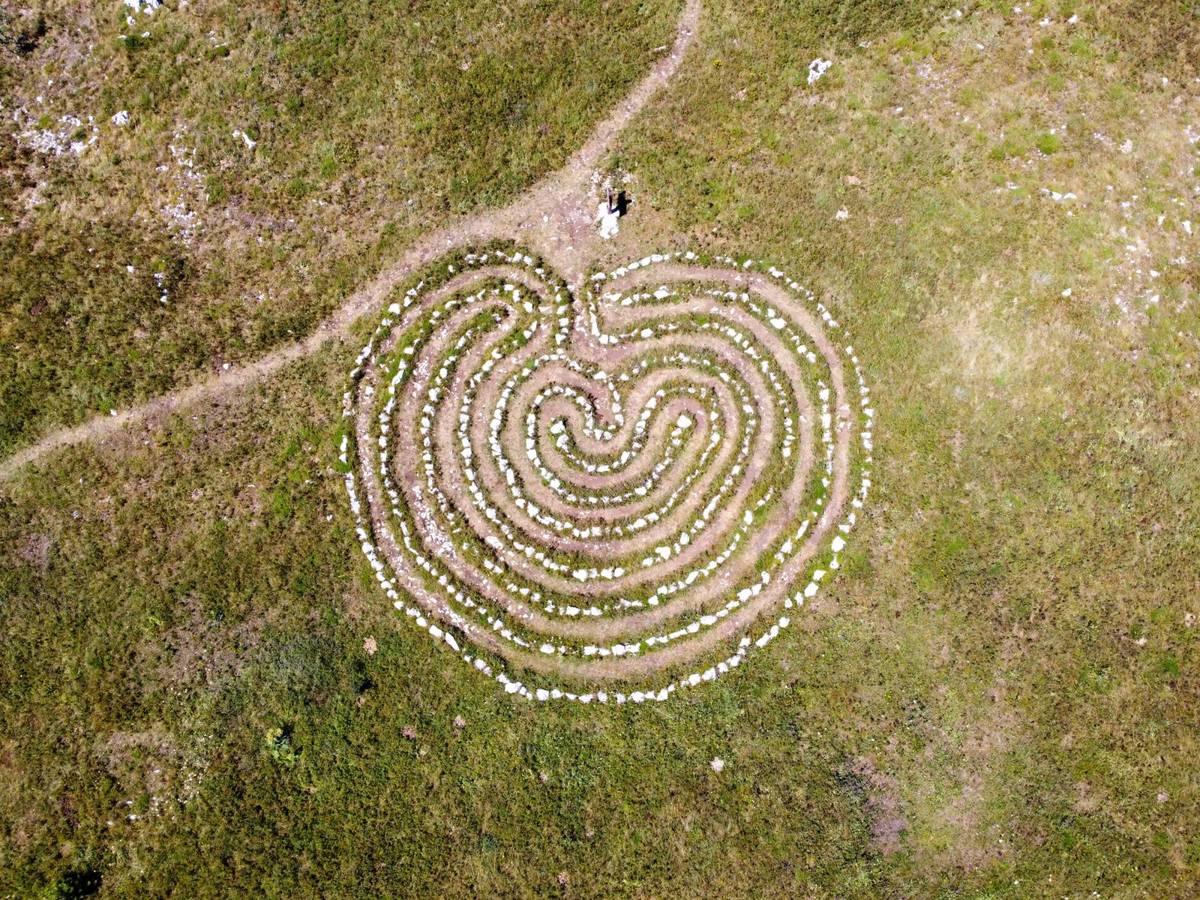
The CCSU guidelines say to follow your natural pace. Some people move quickly through the early turns and slow down near the middle, while others stay slow throughout. Either is fine.
The same page asks walkers to be mindful of stepping aside if others are on the path. Paths are often narrow, so a small pause or a step onto a boundary line lets someone pass without any fuss.
At the centre, there is no schedule. The guide says to sit or stand there as long as you like. If other people are waiting, you can move on when you feel ready.
The path also turns you in many directions. At one moment you may be walking close to the centre and the next moment heading away from it. Treat that as part of the experience rather than a sign that you are doing it wrong.
Ways to make the walk your own
Veriditas states plainly that there is no right way or wrong way to walk a labyrinth. That gives you room to try different approaches on different days.
- A question walk: carry one open question in, and leave it alone at the centre.
- A release walk: name something you want to set down as you enter.
- A breath walk: match each step to an in-breath or an out-breath.
- A quiet walk: no purpose at all, only noticing sounds, light and your footsteps.
If you cannot visit one in person, a finger labyrinth lets you trace a small pattern with your fingertip and follow the same stages on a tabletop.
Afterwards, give yourself a minute to sit. Writing down a line or two can help you remember what the walk stirred up, and nobody else needs to read it.
What to do after the walk
The walk does not have to end when your feet leave the path. Veriditas says that, symbolically and sometimes actually, you are taking back out into the world what you have received.
A few simple habits help that carry-over happen.
- Sit quietly for a few minutes before checking messages.
- Write down one word or image that stayed with you.
- Drink some water and stretch, since slow walking can still tire the legs.
- Come back another day and notice how the same path feels different.
Some people find that the second or third visit says more than the first. The path is the same, but you arrive in a different mood each time, and that changes what you notice.
If you walk with a friend or a group, agree beforehand to keep some quiet and leave space between walkers. That keeps the path calm for everyone, and you can talk about the experience afterwards instead.
Others prefer to walk once and leave it there. Both are perfectly reasonable ways to use a labyrinth, and neither needs a reason.
Common worries
New walkers often worry about looking foolish, doing it wrong or not feeling anything special. The setting and other walkers’ behaviour vary by location.
If your mind keeps racing, that is normal. Bring your attention back to your feet and the path, and carry on without scolding yourself.
If you are not sure whether a particular labyrinth is open to the public, or whether there are rules about shoes or times, check with the site that hosts it. This website is independent and cannot give access or take enquiries for any location.
Frequently asked questions
How long does it take to walk a labyrinth?
Show answer
It depends on the labyrinth’s size and your pace. The guidance from CCSU is to follow your natural pace and to stay at the centre as long as you like, so there is no fixed time.
Do I have to follow the three stages?
Show answer
No. Veriditas describes three stages as a general pattern, and it also says there is no right way or wrong way to walk a labyrinth.
Do I leave the same way I came in?
Show answer
Yes. Veriditas explains that you use the same path to return from the centre, so the entrance becomes the exit.
What if someone else is on the path?
Show answer
Be mindful of stepping aside to let others pass, as the CCSU guide suggests, and then carry on at your own pace.